Osteoporosis in India — Risk Factors and Hip Fracture Prevention — Shivaan Hospital Surat
Bone Health Guide · Surat 2026

Osteoporosis in India: Silent Bone Loss, Risk Factors and How to Prevent a Hip Fracture

Kokilaben, 71, from Adajan, Surat, had never had a bone density test and never felt unwell. One morning she slipped on a wet bathroom floor — a fall most people walk away from — and fractured her hip. In hospital, her scan showed her bones had been thinning silently for years.

Osteoporosis causes no pain until a bone breaks. The good news: it can be detected early, slowed and often treated effectively.
📍 Shivaan Hospital, Surat🩺 Dr. Krunal Donda⏱ 8 min read
~50M
Indians estimated to have osteoporosis or low bone mass
1 in 5
Hip fracture patients die within a year, in studies
0
Warning symptoms before the first fracture
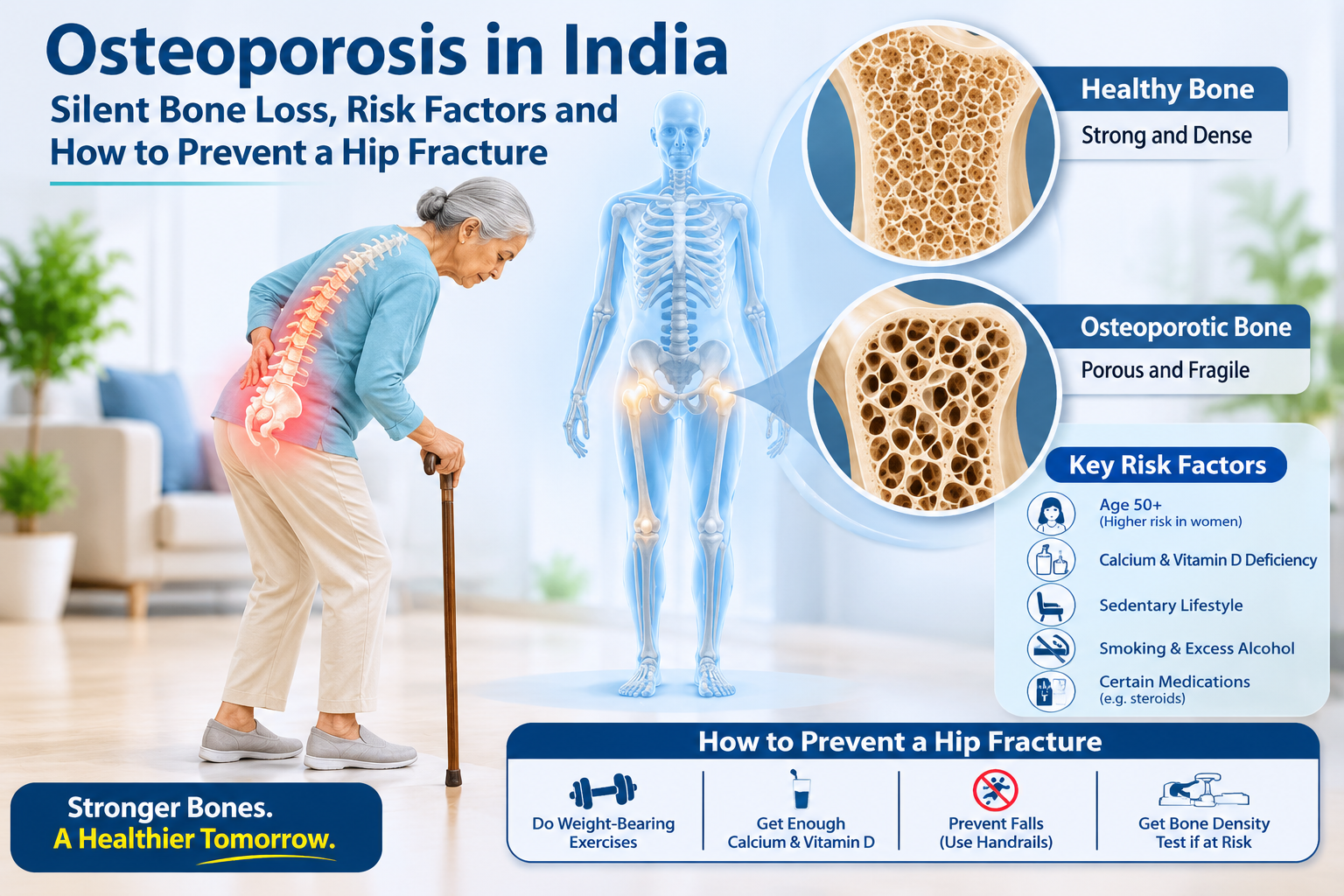
Osteoporosis and bone loss illustration showing healthy bone and osteoporotic bone, highlighting hip fracture prevention and bone health.
Understanding the condition

What Is Osteoporosis? Why It Stays Silent

Healthy bone is living tissue, constantly broken down and rebuilt. Osteoporosis develops when bone is removed faster than it is replaced. The internal honeycomb thins out, and bones can fracture from minimal force — a fall from standing height, a cough, or lifting a heavy bag. At Shivaan Hospital we assess bone health as part of our Osteoporosis & Bone Health Center and coordinate care with hip fracture surgery when needed. Patients with advanced joint wear may also need evaluation for total hip replacement or physical therapy.

Healthy Bone
Dense, tightly woven internal structure that absorbs force and resists fracture.
Osteoporotic Bone
Thin, widely spaced structure with large gaps — fragile and prone to fracture.
Peak bone mass and decline
Bone mass peaks in the late twenties to early thirties, then declines slowly. In women the decline speeds up sharply after menopause. Men are affected too, usually about a decade later — and are under-diagnosed.
The real danger

Why Fractures Are the Serious Consequence

Hip fracture
Most need surgery. Studies suggest around one in five older patients die within a year, often from complications of immobility such as clots and chest infection. Many lose their independence.
Spinal fracture
Often missed. It can appear as loss of height, a stooped back or persistent back pain wrongly dismissed as ageing.
Wrist fracture
Often the first warning. A wrist fracture after a minor fall in midlife should prompt a bone density check.
The fracture cascade
A first fragility fracture greatly raises the chance of another, especially in the first one to two years — so it should never be treated as an isolated accident.
Quick self-check

How Many Risk Factors Do You Have?

Tick any that apply. This is an awareness tool, not a diagnosis — only a clinical assessment and bone density scan can confirm bone health.

Bone Risk Self-Check
Tap each statement that applies to you or a family member.
0
Tick the statements above to see a general guide.
Awareness guide only. It does not replace a clinical assessment or DEXA scan.
Measuring bone density

The DEXA Scan and Your T-Score

A DEXA scan is quick, painless and uses a very low radiation dose. It measures bone density at the spine and hip and reports a T-score comparing your bones with a healthy young adult.

Normal
Osteopenia
Osteoporosis
−1.0 and above
−1.0 to −2.5
−2.5 and below
Normal
Bone density is within the healthy range. Maintain it with diet, exercise and sensible sun exposure.
Osteopenia
Bone density is below normal but not in the osteoporosis range — the best window for prevention and lifestyle correction.
Osteoporosis
Bones are significantly weakened and fracture risk is high. Medical treatment is usually recommended. A fragility fracture on top of this means severe osteoporosis needing urgent assessment.
Who should be scanned?

Who Should Have a DEXA Scan?

Women aged 65+
Men aged 70+
Postmenopausal women with risk factors
Men over 50 with risk factors
Any fracture from a minor fall
Long-term steroid users
Noticeable loss of height or stooping
Thyroid, kidney or malabsorption disorders
Protecting your bones

Prevention and Treatment: Five Pillars

1. Nutrition
Calcium and protein matter. Good sources include milk, curd, paneer, ragi, sesame, leafy greens, pulses and nuts. Supplements, if needed, should be at the dose your doctor advises — too little and too much both cause problems.
2. Vitamin D and Sunlight
Surveys show low vitamin D is common across Indian cities despite sunshine. Get your level checked and follow medical advice on dose and duration rather than self-prescribing.
3. Exercise
Walking, stair climbing, light strength training and balance work strengthen bone and reduce falls. With established osteoporosis, avoid forceful forward bending and twisting and ask for tailored guidance.
4. Lifestyle
Stop smoking, keep alcohol low, avoid being underweight, and review medicines that cause dizziness or bone loss with your doctor.
5. Medical Treatment
When bone density or fracture history shows high risk, doctors may prescribe bone-strengthening medicines that either slow bone breakdown or stimulate new bone formation. The right choice depends on your age, bone density, kidney function and other conditions, so treatment is always individually decided.
Preventing the fall

Fall-Proofing Your Home

Most hip fractures follow a fall, and most falls happen at home. Simple changes in three places make a real difference:

Bathroom
Non-slip mats and grab rails
Keep floors dry
Consider a raised seat if rising is hard
Corridors and Stairs
Bright lighting, including at night
Secure handrails on both sides
Clear clutter and trailing cables
Living Areas
Remove loose rugs
Secure footwear indoors
Use a walking aid if unsteady
Why Surat patients trust Shivaan

Why Choose Shivaan Hospital for Bone Health and Fracture Care?

Fracture care and fracture prevention under one specialist — so a broken bone becomes the start of a plan, not just a repair. Related services include our diagnostic imaging and hip pain assessment pathways.

🦴
Bone Health Assessment
Orthopaedic interpretation of DEXA results together with your personal fracture risk.
🧪
Complete Work-Up
Vitamin D, calcium and related blood tests arranged as part of the assessment.
🏥
Hip Fracture Surgery
Early surgery and early mobilisation to give older patients the best chance of recovery.
🛡️
Prevent the Next Fracture
A fracture-prevention plan after any fragility fracture, not only fixing the broken bone.
🚶
Physio and Balance Training
Structured rehabilitation to rebuild strength and reduce the risk of falls.
📋
Clear Written Plan
Investigations, treatment options and follow-up explained in writing.
When to act

When to See a Specialist

You have had a fracture after a minor fall, or a wrist, spine or hip fracture after 50
You are a postmenopausal woman or older man who has never had a bone density test
You have lost height, developed a stooped back, or have new persistent back pain
You take long-term steroids or have a condition that affects bone
A parent had a hip fracture
Patient questions answered

Frequently Asked Questions

Basics
Testing
Treatment and Living
Does osteoporosis cause pain?
Not usually, until a bone fractures — which is why it is called a silent disease. Back pain, loss of height or a stooped posture can signal spinal fractures and deserve investigation.
Can men get osteoporosis?
Yes. Men tend to develop it later than women, but it is under-diagnosed. Steroid use, alcohol, smoking, low testosterone and chronic illness all raise the risk.
Does menopause always cause osteoporosis?
No, but it accelerates bone loss. Starting good habits early, and checking bone density after menopause if you have risk factors, helps catch problems before a fracture.
Is calcium enough to prevent osteoporosis?
No. Bones also need vitamin D, protein, exercise and healthy hormone levels. Calcium alone without checking vitamin D often fails to protect bone.
What is a normal T-score?
−1.0 or higher is normal, −1.0 to −2.5 is osteopenia, and −2.5 or lower is osteoporosis. Your doctor interprets it together with your age, fracture history and other risk factors.
How often should I repeat a DEXA scan?
It depends on your result and treatment. People with normal results may be rescanned after several years, while those on treatment are often rescanned every one to two years. Your doctor will advise you.
How do I book a bone health assessment at Shivaan Hospital?
Call or WhatsApp +91 98790-99184, visit Infinity Tower, Lal Darwaja Station Road, Surat, or book at shivaanhospital.com. Bring previous scans, blood tests and medicine lists.
Can osteoporosis be reversed?
Bone density can often be improved with treatment, and fracture risk can be reduced substantially. The aim is to strengthen bone, prevent fractures and keep you active.
Is exercise safe with osteoporosis?
Yes, and it is recommended. Walking, light resistance work and balance exercises help. Avoid forceful forward bending, twisting and high-impact activity if bones are very fragile, and ask for tailored advice.
What should I do after a hip fracture?
Seek urgent hospital care. Most hip fractures need surgery within a day or two, followed by early walking with physiotherapy. A bone health assessment and treatment plan should follow to prevent another fracture.
Step 1
Consultation
Step 2
Blood Tests
Step 3
DEXA Review
Step 4
Written Plan
Check your bone health

Don't Wait for a Fracture to Find Out. Check Your Bone Health.

Book a bone health consultation with Dr. Krunal Donda at Shivaan Hospital, Surat. Get your fracture risk assessed, understand your DEXA results and receive a clear plan to protect your bones.

📞
Call / WhatsApp
+91 98790-99184
📍
Location
Infinity Tower, Lal Darwaja Station Road, Surat
🌐
Website
shivaanhospital.com

Leave a Comment

Your email address will not be published. Required fields are marked *

Scroll to Top