
Minimally Invasive Muscle-Sparing Hip Replacement
— Best Hip Surgeon in Surat, Gujarat | Faster Recovery, Less Pain
German fellowship-trained Dr. Krunal Donda — the best minimally invasive hip replacement surgeon in Surat, Gujarat — specializes in minimally invasive hip replacement surgery using advanced anterior approach technique, preserving muscles and accelerating recovery at Shivaan Hospital, Surat.
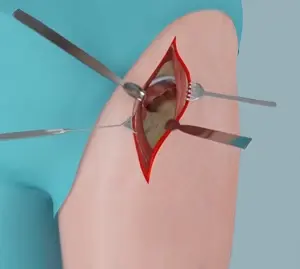
What is Minimally Invasive Muscle-Sparing Hip Replacement in Surat, Gujarat?
Minimally invasive hip replacement surgery in Surat is an advanced surgical approach that replaces the damaged hip joint through smaller incisions while preserving surrounding muscles and soft tissues. As the best minimally invasive hip replacement surgeon in Surat, Gujarat, Dr. Krunal Donda at Shivaan Hospital, Surat performs this muscle-sparing hip replacement technique to minimize surgical trauma and accelerate patient recovery across Surat and Gujarat, India.
Unlike traditional hip replacement that requires cutting through major muscles, the minimally invasive anterior approach in Surat works between muscles rather than through them. This tissue-preserving technique results in less pain, faster healing, reduced blood loss, and earlier return to normal activities — making it the preferred choice for eligible patients seeking the best hip replacement surgery in Surat, Gujarat.
The Direct Anterior Approach: How It Works in Surat
The direct anterior approach for hip replacement in Surat is performed through the front of the hip, accessing the joint through a natural interval between muscles. Dr. Krunal Donda at Shivaan Hospital, Surat uses this anterior hip replacement technique in Surat, Gujarat to preserve the important gluteal muscles that stabilize the hip during walking and prevent dislocation.
During minimally invasive anterior hip replacement, the surgeon works between the tensor fasciae latae and sartorius muscles without cutting any major muscle groups. This muscle-sparing surgical approach maintains the structural integrity of the hip, allowing patients to bear weight immediately after surgery and reducing the risk of post-operative complications common with traditional methods.
-
✓
Muscle preservation: No muscles are cut or detached, maintaining natural hip biomechanics and stability.
-
✓
Superior visualization: Direct view of acetabulum and femur allows precise component positioning and leg length management.
-
✓
Reduced dislocation risk: Preserved posterior capsule and muscles provide inherent stability, minimizing dislocation concerns.


Minimally Invasive vs Traditional Hip Replacement Surgery in Surat
Understanding the differences between traditional hip replacement and minimally invasive muscle-sparing hip replacement in Surat helps patients make informed decisions. At Shivaan Hospital, Surat, Dr. Krunal Donda — the best minimally invasive hip surgeon in Surat, Gujarat — offers advanced anterior approach hip replacement that provides significant advantages over conventional techniques.
Surgical Approach Comparison — Hip Replacement in Surat
| Aspect | Traditional Approach | Minimally Invasive (Surat) |
|---|---|---|
| Incision Size | 20-30 cm | 8-12 cm |
| Muscle Damage | Cuts major muscles | No muscle cutting |
| Hospital Stay | 4-6 days | 2-3 days |
| Recovery Time | 12-16 weeks | 6-8 weeks |
| Post-op Pain | Moderate to high | Mild to moderate |
| Blood Loss | Higher volume | Significantly reduced |
| Dislocation Risk | Higher (2-5%) | Lower (0.5-1%) |
| Weight Bearing | Delayed (weeks) | Immediate (same day) |
Who is a Candidate for Minimally Invasive Hip Replacement in Surat?
Not every patient requiring hip replacement surgery in Surat is suitable for the minimally invasive anterior approach. Dr. Krunal Donda carefully evaluates each patient at Shivaan Hospital, Surat, Gujarat to determine candidacy for this muscle-sparing technique, considering body habitus, bone quality, hip anatomy, and the extent of arthritis.
The anterior approach hip replacement in Surat works best for patients with primary hip arthritis, osteonecrosis, or certain hip fractures across Surat and Gujarat. Those with normal or slightly elevated BMI, good bone quality, and straightforward hip anatomy are ideal candidates. Dr. Donda's German fellowship training in advanced hip surgery ensures optimal outcomes for eligible patients in Surat, Gujarat, India.
- ✓Primary hip arthritis:Osteoarthritis, rheumatoid arthritis, or post-traumatic arthritis with preserved bone structure.
- ✓Appropriate body type:BMI under 35-40, with adequate soft tissue allowing anterior approach access.
- ✓Good bone quality:Sufficient bone stock for stable implant fixation without significant osteoporosis.
- ✓No previous hip surgery:Primary hip replacement without significant scarring or anatomical distortion.
- ✓Active lifestyle goals:Patients in Surat seeking faster return to work, sports, or daily activities benefit most.


The Minimally Invasive Hip Replacement Procedure at Shivaan Hospital, Surat, Gujarat
During minimally invasive anterior hip replacement surgery in Surat, Dr. Krunal Donda uses specialized instruments and a dedicated orthopedic table to perform the procedure through an 8-12cm incision on the front of the hip. The muscle-sparing technique involves working through the natural interval between muscles, accessing the hip joint without cutting any major muscle groups or tendons at Shivaan Hospital, Surat, Gujarat.
The procedure typically takes 60-90 minutes at Shivaan Hospital, Surat. Using advanced navigation technology when needed, Dr. Donda precisely positions the implant components to optimize leg length, offset, and joint mechanics. The anterior approach hip replacement in Surat allows for intra-operative X-ray verification and immediate assessment of limb length equality — critical factors for successful outcomes.
- 1Patient positioning:Supine position on specialized table allowing optimal hip access and leg manipulation.
- 2Minimally invasive incision:Small anterior incision made between muscle groups without cutting major structures.
- 3Joint exposure:Hip capsule opened, femoral head dislocated anteriorly with preserved posterior structures.
- 4Bone preparation:Damaged cartilage and bone removed, acetabulum and femur prepared for implant insertion.
- 5Implant placement:Acetabular cup and femoral stem positioned with precision, ensuring optimal biomechanics.
- 6Verification & closure:Leg length checked, range of motion tested, wound closed in layers with minimal scarring.
Faster Recovery with Minimally Invasive Hip Replacement in Surat, Gujarat
One of the most significant advantages of minimally invasive muscle-sparing hip replacement in Surat is the dramatically accelerated recovery timeline. Patients undergoing anterior approach hip replacement with Dr. Krunal Donda at Shivaan Hospital, Surat, Gujarat typically experience faster mobilization, reduced pain, and quicker return to normal activities compared to traditional hip replacement methods.
Most patients receiving minimally invasive hip surgery in Surat are walking with assistance on the same day of surgery and can bear full weight as tolerated within 24-48 hours. The preserved muscle function and reduced tissue trauma allow for immediate mobility without the traditional hip precautions required after posterior approach surgery, contributing to improved confidence and faster functional recovery for patients across Surat, Gujarat, India.
- ✓Day of surgery:Standing and walking with walker assistance, beginning immediate post-operative rehabilitation in Surat.
- ✓1-3 days post-op:Hospital discharge from Shivaan Hospital, Surat after achieving mobility milestones, pain control, and wound assessment.
- ✓1-2 weeks:Progressing to cane or no assistance, performing daily activities independently with minimal restrictions.
- ✓4-6 weeks:Returning to desk work, driving, and most normal activities with continued strength building.
- ✓8-12 weeks:Resuming recreational activities, light sports, and manual work with full functional recovery.


Key Advantages of Muscle-Sparing Hip Replacement Surgery in Surat
Patients choosing minimally invasive anterior approach hip replacement with Dr. Krunal Donda at Shivaan Hospital, Surat, Gujarat, India experience numerous clinical and lifestyle benefits. The muscle-preserving surgical technique offers advantages that extend beyond the immediate post-operative period, providing long-term functional benefits and improved quality of life for patients across Surat and Gujarat.
- ✓Reduced post-operative pain:No muscle cutting means less tissue trauma, reduced pain medication requirements, and better comfort.
- ✓Shorter hospital stay:Most patients discharged 2-3 days post-surgery versus 4-6 days with traditional approaches.
- ✓Lower dislocation risk:Preserved posterior structures provide inherent stability, minimizing dislocation concerns (0.5-1% vs 2-5%).
- ✓Faster functional recovery:Return to work, driving, and daily activities 4-6 weeks faster than traditional methods.
- ✓Superior cosmetic results:Smaller incisions heal with minimal scarring, typically 8-12cm on the front of the hip.
- ✓Reduced blood loss:Muscle-sparing approach minimizes bleeding, rarely requiring blood transfusion.
- ✓No hip precautions:Preserved muscles allow normal movement patterns immediately without traditional restrictions.
- ✓Better leg length accuracy:Supine positioning enables intra-operative assessment ensuring optimal limb length equality.
Potential Risks and Considerations for Hip Replacement in Surat
While minimally invasive anterior hip replacement in Surat offers numerous advantages, it's important to understand potential risks and limitations. Dr. Krunal Donda provides comprehensive counseling about both benefits and risks at Shivaan Hospital, Surat, Gujarat, India, ensuring patients make fully informed decisions about their hip replacement surgery.
The anterior approach hip replacement technique has a learning curve requiring specialized training — Dr. Donda's German fellowship in advanced hip surgery ensures world-class expertise in Surat. Some patients may not be candidates due to anatomy, obesity, or previous surgeries. Understanding these factors helps set realistic expectations for minimally invasive hip replacement in Surat, Gujarat.
- ✓Lateral femoral cutaneous nerve:Temporary numbness in outer thigh area (10-15% of cases), usually resolves within months.
- ✓Wound healing concerns:Anterior incision location generally heals well but requires careful management in high-BMI patients.
- ✓Fracture risk:Small risk of femoral or acetabular fracture during surgery, similar to traditional approaches.
- ✓General surgical risks:Infection, blood clots, anesthesia complications — minimized with modern protocols at Shivaan Hospital, Surat.
- ✓Not suitable for all:Complex hip deformities, severe osteoporosis, or very high BMI may require traditional approaches.


Dr. Krunal Donda — Best Minimally Invasive Hip Replacement Surgeon in Surat, Gujarat
Dr. Krunal Donda is the best minimally invasive hip replacement surgeon in Surat, Gujarat, India — leading orthopedic specialist with advanced training from Germany in modern hip arthroplasty techniques. Dr. Donda brings international expertise in anterior approach hip replacement and muscle-sparing surgical methods to patients at Shivaan Hospital, Surat.
Dr. Donda's fellowship training focused specifically on minimally invasive joint replacement techniques, rapid recovery protocols, and advanced implant technology. His expertise in anterior hip replacement surgery in Surat ensures patients receive world-class care with outcomes comparable to leading international centres. The combination of specialized training, modern surgical equipment, and comprehensive rehabilitation programmes makes Shivaan Hospital, Surat the premier destination for minimally invasive hip replacement in Surat, Gujarat, India.
Long-Term Outcomes and Success Rates for Hip Replacement in Surat
Research demonstrates that minimally invasive anterior approach hip replacement in Surat delivers excellent long-term outcomes comparable or superior to traditional methods. Studies show 95-98% implant survival at 10 years, with patients experiencing significant pain relief, improved function, and high satisfaction rates. Dr. Krunal Donda's patients at Shivaan Hospital, Surat, Gujarat consistently achieve these outstanding results.
The muscle-sparing technique preserves normal hip biomechanics, contributing to natural gait patterns and superior functional outcomes for patients across Surat and Gujarat. Patients report better early recovery experiences, faster return to activities, and improved quality of life — making Shivaan Hospital the preferred destination for minimally invasive hip replacement in Surat, Gujarat, India.
- ✓Pain relief:95-98% of patients experience complete or near-complete resolution of hip pain.
- ✓Functional improvement:Significant gains in walking distance, stair climbing, and daily activity performance.
- ✓Return to sports:Many patients return to golf, swimming, cycling, and other low-impact recreational activities.
- ✓Patient satisfaction:90-95% report being satisfied or very satisfied with their minimally invasive hip replacement.
- ✓Implant longevity:Modern implants last 20-25+ years in most patients, often providing lifetime function.

Frequently Asked Questions — Minimally Invasive Hip Replacement in Surat, Gujarat
What is the difference between minimally invasive and traditional hip replacement?
Minimally invasive anterior approach hip replacement in Surat uses a smaller incision (8-12cm) and works between muscles without cutting them, while traditional approaches use larger incisions (20-30cm) and cut through major muscle groups. The muscle-sparing technique results in less pain, faster recovery, reduced blood loss, lower dislocation risk, and shorter hospital stays. Dr. Krunal Donda at Shivaan Hospital, Surat — the best minimally invasive hip surgeon in Surat, Gujarat — specialises in this advanced technique, offering patients significantly improved recovery experiences. Call +91 98790 99184.
How long is the recovery time for minimally invasive hip replacement surgery in Surat?
Recovery from minimally invasive hip replacement in Surat at Shivaan Hospital is significantly faster than traditional methods. Most patients walk on the day of surgery, leave hospital in 2-3 days, and return to desk work within 4-6 weeks. Full recovery including return to recreational activities typically occurs within 8-12 weeks, compared to 12-16 weeks for traditional approaches. Dr. Donda provides personalised rehabilitation protocols to optimise each patient's recovery timeline in Surat.
Am I a candidate for minimally invasive anterior approach hip replacement in Surat?
Most patients with hip arthritis, osteonecrosis, or certain hip fractures in Surat are candidates for minimally invasive anterior hip replacement. Ideal candidates have BMI under 35-40, good bone quality, and no significant hip deformities or previous surgeries. Dr. Krunal Donda at Shivaan Hospital, Surat performs comprehensive evaluation including physical examination, X-rays, and medical assessment to determine suitability. Call +91 98790 99184 or visit G-12, 13, 17–20, Infinity Tower, Lal Darwaja Station Road, Surat 395003, Gujarat, India.
What is the success rate of minimally invasive hip replacement surgery in Surat?
Minimally invasive anterior approach hip replacement in Surat has excellent success rates — 95-98% implant survival at 10 years and 90-95% patient satisfaction. The muscle-preserving technique results in lower complication rates and reduced dislocation risk (0.5-1% vs 2-5% traditional). Dr. Krunal Donda's specialized training and experience at Shivaan Hospital, Surat ensure outcomes comparable to leading international centres.
How much does minimally invasive hip replacement cost in Surat?
The cost of minimally invasive hip replacement surgery at Shivaan Hospital, Surat varies based on implant choice, hospital stay duration, and individual patient needs. While initially similar to traditional hip replacement costs, the minimally invasive approach often results in cost savings through shorter hospital stays, reduced medication requirements, and lower complication rates. Dr. Krunal Donda's team provides detailed cost estimates during consultation with no hidden charges. Insurance support and cashless approvals are available. Call +91 98790 99184 or visit G-12, 13, 17–20, Infinity Tower, Lal Darwaja Station Road, Surat 395003, Gujarat, India for a personalised estimate.
Can I return to sports after minimally invasive hip replacement in Surat?
Yes, many patients return to recreational sports after minimally invasive hip replacement surgery in Surat. The muscle-sparing technique preserves hip strength and stability, facilitating return to activities like golf, swimming, cycling, tennis, and hiking. Return to sports timeline: low-impact activities at 8-12 weeks, moderate activities at 3-4 months, and gradual progression to full activity by 6 months. Dr. Donda at Shivaan Hospital, Surat provides sport-specific rehabilitation guidance and clearance based on individual healing and strength assessment.
Experience faster recovery with minimally invasive hip replacement in Surat, Gujarat — Consult Dr. Krunal Donda today
Contact on WhatsApp — +91 98790 99184Choose the Best Minimally Invasive Hip Replacement at Shivaan Hospital, Surat, Gujarat, India — If you're suffering from hip arthritis and seeking the most advanced, least invasive treatment option, Dr. Krunal Donda's expertise in minimally invasive anterior approach hip replacement in Surat offers you the opportunity for faster recovery, less pain, and better outcomes. With German fellowship training in cutting-edge hip surgery techniques and access to the latest implant technology, Dr. Donda provides world-class muscle-sparing hip replacement surgery right here in Surat, Gujarat. The combination of specialized surgical skills, comprehensive pre-operative planning, personalised rehabilitation protocols, and dedicated post-operative care makes Shivaan Hospital the premier destination for minimally invasive hip replacement in Surat, Gujarat, India. Whether you're dealing with osteoarthritis, avascular necrosis, or hip fractures, our team is committed to restoring your mobility, eliminating pain, and helping you return to the active lifestyle you deserve. Contact us today — Shivaan Hospital, G-12, 13, 17–20, Infinity Tower, Lal Darwaja Station Road, Surat 395003, Gujarat, India. Call +91 98790 99184.