

Dr Krunal Donda
M.S. Ortho • Fellow in Joint Replacement (Germany) • Best Revision Knee Replacement Surgeon in Surat
Shivaan Hospital, G-12, 13, 17–20, Infinity Tower, Lal Darwaja Station Road, Surat 395003, Gujarat, India
Best Revision Knee Replacement Surgeon in Surat — Expert Treatment for Failed or Painful Knee Implants
If your previous knee replacement is still painful or unstable, revision total knee replacement in Surat may restore comfort and function. At Shivaan Hospital, Surat, Gujarat, Dr Krunal Donda — the best revision knee replacement surgeon in Surat — treats implant loosening, infection, instability, stiffness and periprosthetic fractures using modern planning, computer-assisted alignment and structured rehabilitation.
GET A FREE REVISION CONSULTATION IN SURATEvidence-based revision TKR in Surat | CAS guidance | Modular stems & augments | Multidisciplinary infection care
Best Revision Total Knee Replacement Surgeon in Surat, Gujarat — Book with Dr Krunal Donda at Shivaan Hospital
Book ConsultationIndications for Revision Knee Replacement in Surat
Persistent pain, instability, swelling, stiffness, infection, implant loosening/wear, or fractures around the implant. Dr Donda at Shivaan Hospital, Surat diagnoses the root cause and plans a safe, personalised solution.
Computer-Assisted Revision Knee Surgery in Surat
Digital templating, computer-assisted navigation, modular stems, wedges and augments to rebuild bone loss and restore alignment — at Shivaan Hospital, Surat's leading orthopedic centre.
Structured Rehab After Revision Knee Replacement in Surat
Enhanced recovery protocols, specialist physiotherapy in Surat and infection-prevention bundles for reliable outcomes and confident walking across Surat and Gujarat.
Are You a Candidate for Revision Knee Replacement in Surat, Gujarat?
You may benefit from revision knee replacement in Surat if you have any of the following after a previous knee replacement surgery. Dr Krunal Donda at Shivaan Hospital, Surat will assess your specific case with X-rays, blood tests, and clinical examination:
- Ongoing pain, swelling or warmth around the knee
- Giving-way, instability or recurrent effusions
- Stiffness affecting stair-climbing and daily tasks
- Imaging evidence of loosening or bone loss
- History suggestive of infection (raised markers, sinus, positive cultures)
- Periprosthetic fracture after a fall or trauma
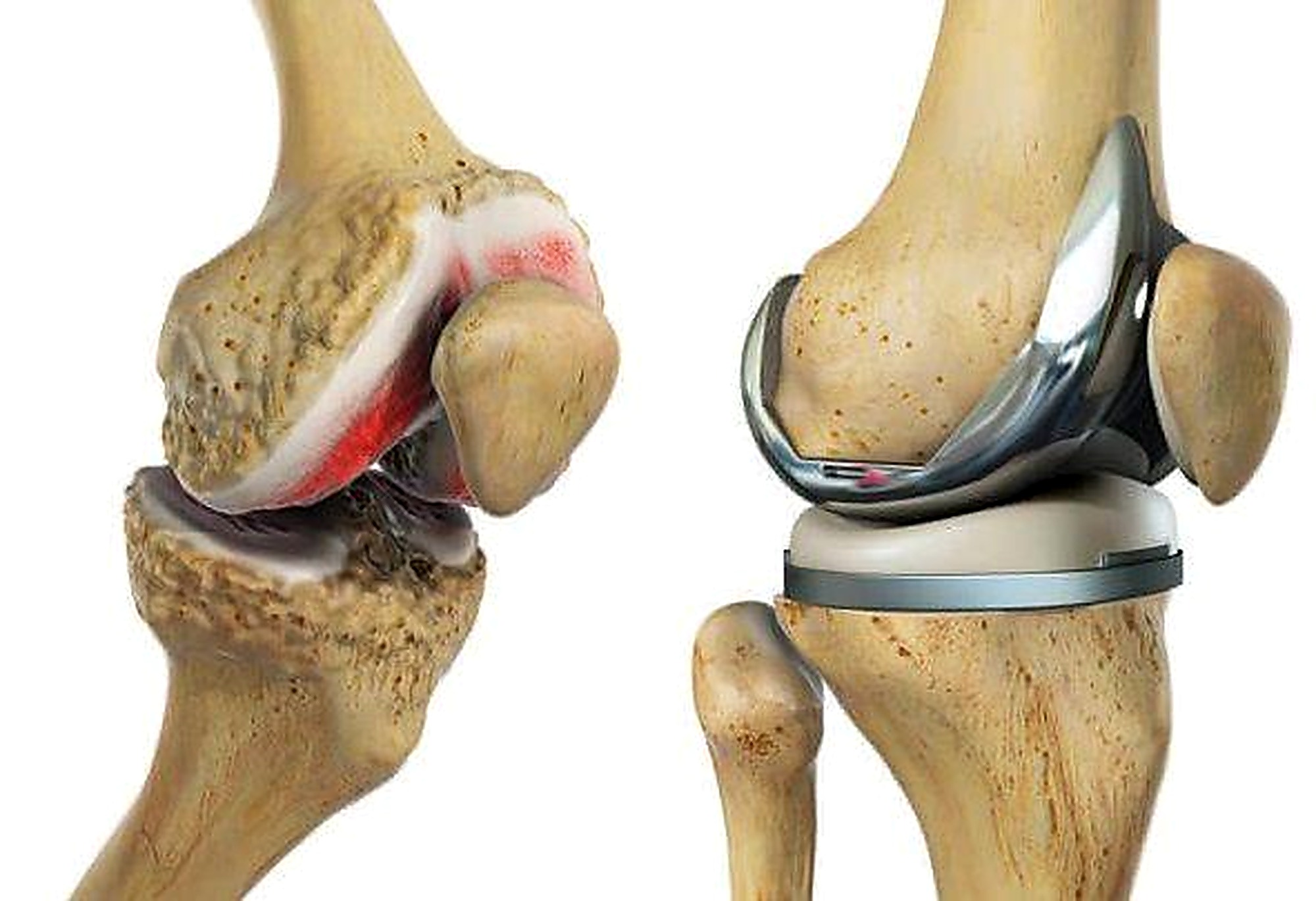
Failed Knee Implant Conditions Treated at Shivaan Hospital, Surat
Loosening, Wear & Malalignment — Treated in Surat
Poly wear debris, osteolysis and alignment errors can cause pain or instability. Dr Krunal Donda at Shivaan Hospital, Surat restores joint line, alignment and balance with modular revision systems.
Knee Replacement Infection Treatment in Surat (Two-Stage/One-Stage)
Multidisciplinary protocol at Shivaan Hospital, Surat: debridement & liner exchange when appropriate, or staged revision with antibiotic spacers followed by definitive re-implantation.
Knee Instability After Replacement — Surat
Collateral laxity or PCL issues are addressed by the best revision knee surgeon in Surat with constrained inserts and accurate component rotation to restore stability.
Knee Stiffness & Arthrofibrosis After Replacement — Surat
From targeted releases to component revision when malpositioned — Dr Donda at Shivaan Hospital, Surat aims for functional flexion with early, guided physiotherapy in Surat.

Precision, Stability & Faster Rehab — Revision Knee Surgery in Surat
- Computer-assisted surgery in Surat: supports accurate femoral/tibial cuts, joint line restoration and component rotation.
- Modular stems, cones & augments: rebuild bone defects securely at Shivaan Hospital, Surat.
- Constrained options: varus-valgus constrained or hinged systems when required for stability.
- Enhanced recovery in Surat: multimodal analgesia, early mobilisation and VTE prophylaxis for faster return to daily life.
Recovery After Revision Total Knee Replacement at Shivaan Hospital, Surat
Hospital (2–5 days)
Early standing, antibiotics if needed, pain control and safe walking at Shivaan Hospital, Surat.
Weeks 1–6
ROM targets, wound checks, phased strengthening and gait training with Dr Donda's physiotherapy team in Surat.
Months 3–6
Stamina improves; most daily activities resume comfortably with follow-up at Shivaan Hospital, Surat.
Up to 1 Year
Strength and endurance consolidate; joint-friendly lifestyle advised by the best revision knee surgeon in Surat.
Revision Knee Replacement Cost & Insurance Support in Surat, Gujarat
The cost of revision knee replacement in Surat at Shivaan Hospital varies based on cause (infection/loosening), implant choice and room category. Dr Donda's team provides transparent, itemised quotes with no hidden charges and assists with cashless approvals and reimbursement paperwork across all major insurers.
Request a Cost Estimate in SuratPatients from Surat Share Their Revision Knee Replacement Experience at Shivaan Hospital
"After my old implant loosened, climbing stairs was scary. Revision knee replacement with Dr Donda at Shivaan Hospital, Surat has me walking confidently again."
— Mrs Patel, Adajan, Surat
"Clear plan and careful follow-up at Shivaan Hospital, Surat. The navigation-guided revision knee surgery made a clear difference to alignment."
— Mr Shah, Vesu, Surat
"Two-stage infection revision felt daunting, but Dr Donda's team at Shivaan Hospital, Surat supported me throughout. Back to morning walks!"
— Ms Kaur, Varachha, Surat
Frequently Asked Questions — Revision Knee Replacement in Surat, Gujarat
Your Questions About Revision Knee Replacement in Surat Answered
Revision knee replacement in Surat is more complex than the original surgery. Old components are carefully removed, bone loss is rebuilt with cones/augments, and stems or constrained implants are used to restore stability and alignment. Dr Krunal Donda at Shivaan Hospital, Surat uses computer-assisted navigation to plan each revision precisely.
Longevity depends on cause, bone quality and alignment. With accurate reconstruction by Dr Donda at Shivaan Hospital, Surat and sensible activity modifications, many patients enjoy years of reliable function. Regular follow-up X-rays at our Surat clinic monitor implant integrity over time.
Usually within 24–48 hours at Shivaan Hospital, Surat, depending on stability and pain control. Dr Donda's physiotherapy team begins rehabilitation early with clear, structured milestones to help you regain confidence and mobility in Surat.
One-stage revision replaces the implant in the same operation after thorough debridement. Two-stage uses a temporary antibiotic spacer with a second operation later — often chosen for complex or chronic infections. Dr Donda at Shivaan Hospital, Surat recommends the approach best suited to each patient's infection profile and overall health.
Infection, blood clots, stiffness, nerve or vessel injury (rare), and implant loosening over time. At Shivaan Hospital, Surat, Dr Donda uses evidence-based protocols — including antibiotic prophylaxis, VTE prevention and enhanced recovery — to minimise these risks.
Coverage varies by policy. Shivaan Hospital's team in Surat helps with pre-authorisation, cashless approval and documentation for claims across all major health insurance providers in Gujarat and India. Call +91 98790 99184 to discuss your insurance.
Dr Krunal Donda at Shivaan Hospital is widely regarded as the best revision knee replacement surgeon in Surat, Gujarat. He is a German fellowship-trained M.S. Ortho specialist with expertise in complex revision TKR, infection management, CAS-guided surgery, and modular implant reconstruction. Shivaan Hospital is at G-12, 13, 17–20, Infinity Tower, Lal Darwaja Station Road, Surat 395003, Gujarat, India. Call +91 98790 99184 to book a free consultation.
If your knee replacement has failed in Surat — with persistent pain, loosening, infection, or instability — book an urgent consultation with Dr Krunal Donda at Shivaan Hospital. Bring your previous surgical reports, X-rays, and blood test results. Call +91 98790 99184 or visit G-12, 13, 17–20, Infinity Tower, Lal Darwaja Station Road, Surat 395003, Gujarat, India. Early assessment is critical to plan the best revision strategy.
Ready to Fix a Painful Knee Implant in Surat?
Share your reports and get a personalised revision knee plan with Dr Krunal Donda — best revision knee replacement surgeon in Surat — at Shivaan Hospital, Surat, Gujarat.