
PRP Therapy for Knee Arthritis in India: Does Platelet-Rich Plasma Really Work?
He came to Shivaan Hospital with two questions: Does PRP actually work? And is it right for him specifically? This guide answers both — honestly.
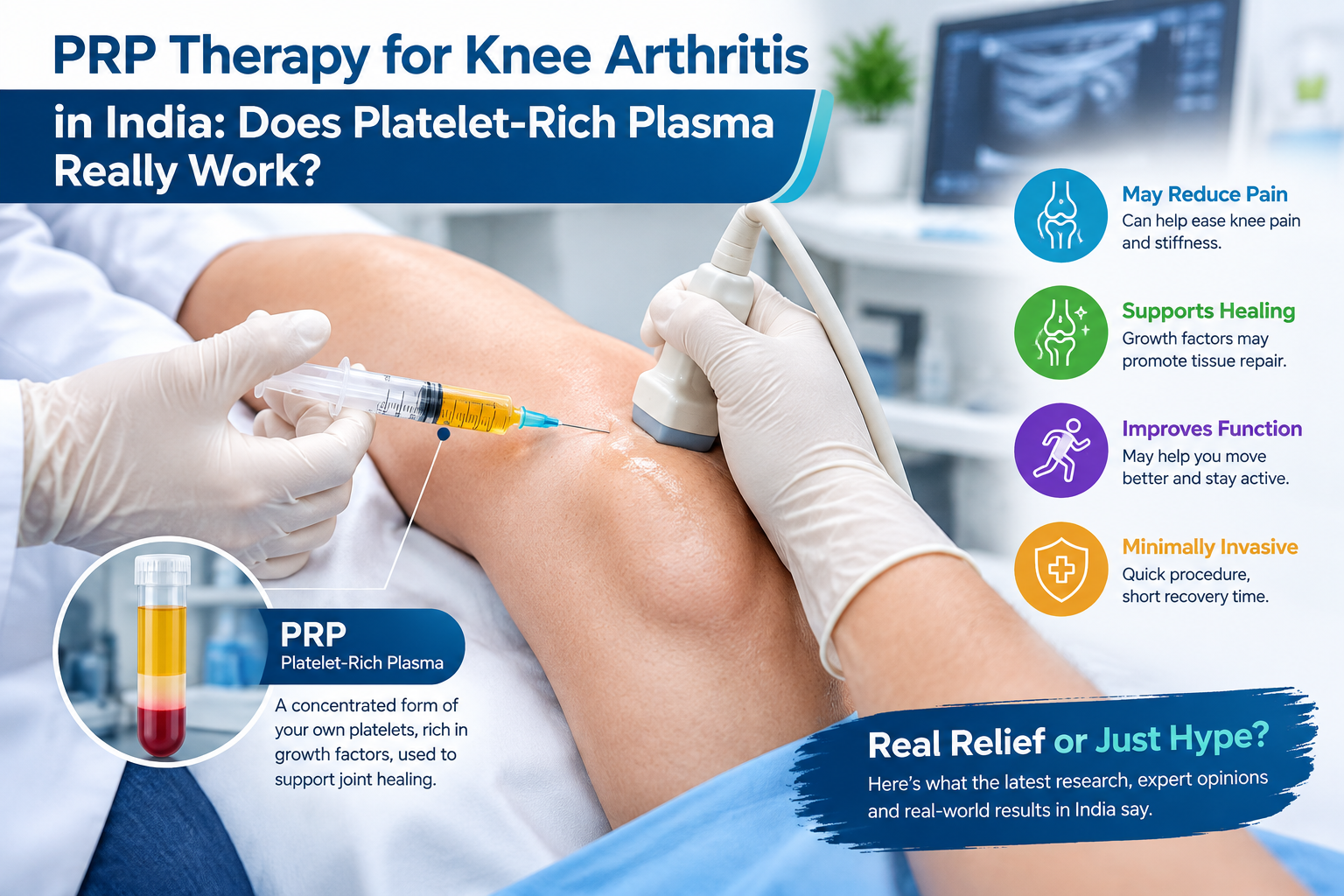
What Is PRP Therapy and How Does It Work?
PRP therapy is a regenerative injection treatment that uses growth factors from the patient's own blood to reduce joint inflammation and stimulate cartilage repair. Critically, it is autologous — entirely derived from your own blood — eliminating the risk of allergic reaction or rejection. At Shivaan Hospital, PRP is offered as part of comprehensive PRP therapy and joint injection care. For advanced arthritis, patients may also explore total knee replacement surgery. Here is the three-step process:
What Does the Evidence Say About PRP for Knee Arthritis?
The evidence for PRP in knee osteoarthritis has grown substantially. Here is an honest summary — including what PRP does well and where its limitations lie. Patients comparing non-surgical options with surgery can also review our guide on signs you need a knee replacement:
PRP vs. Steroid vs. Hyaluronic Acid: Complete Comparison
Patients in Surat are commonly offered steroid or hyaluronic acid injections before PRP is even discussed. Here is how all three compare across every factor that matters:
| Feature | PRP Therapy 💉 | Steroid Injection ⚡ | Hyaluronic Acid 💧 |
|---|---|---|---|
| How it works | Growth factors stimulate cartilage repair & reduce inflammation | Powerful anti-inflammatory — suppresses pain signals rapidly | Lubricates joint; may mildly reduce inflammation |
| Pain relief onset | 2–6 weeks — gradual improvement | 24–72 hours — rapid, dramatic relief | 2–4 weeks — gradual improvement |
| Duration of relief | 12–18 months in good responders | 3–6 months maximum | 3–6 months typical |
| Effect on cartilage | Potentially regenerative — may slow cartilage loss | ⚠ Potentially harmful — repeated use damages cartilage | Neutral to mildly protective — not regenerative |
| Safe for diabetics | ✓ Yes — own blood, no blood sugar effect | ✗ No — causes significant glucose elevation in diabetics | ✓ Yes — no systemic effect |
| Max injections / year | 1–3 per course; repeat at 12–18 months | 3–4 maximum — more causes harm | 3–5 injections per course |
| Best candidate | Grade 1–3 arthritis; active patients; diabetics | Acute flare; severe pain; any grade — short-term | Grade 2–3 arthritis; older patients |
| Approx. cost in Surat | ₹8,000–₹20,000 per session | ₹500–₹2,000 per injection | ₹5,000–₹15,000 per course |
| Risk of harm | Very low — autologous (own blood) | Moderate — repeated use causes cartilage damage | Low — but limited duration for cost |
Who Benefits Most From PRP Therapy for Knee Arthritis?
PRP candidacy is determined by arthritis grade, activity level, and prior treatment history. Here is the clinical decision guide used at Shivaan Hospital:
The PRP Procedure — Before, During, and After
The full PRP experience at Shivaan Hospital takes approximately 45–60 minutes and is performed as a same-day procedure with no hospital admission required:
Why Choose Shivaan Hospital for PRP Therapy?
PRP at Shivaan Hospital is not a walk-in injection clinic service. It is administered by an orthopaedic fellowship specialist with full arthritis assessment, imaging review, and integrated management — not just an injection and farewell.
Signs You Should Consider PRP Therapy for Your Knee
If any of the following apply, book a PRP candidacy consultation — earlier assessment means more regenerative potential and a wider range of non-surgical options:
Frequently Asked Questions
Questions grouped by category — tap any question to expand the answer.
Is PRP Right for Your Knee? Find Out at Shivaan Hospital.
Book a PRP candidacy consultation with Dr. Krunal Donda at Shivaan Hospital, Surat. Get your arthritis grade assessed, receive an honest comparison of all injection options, and a written treatment plan — before committing to any procedure.